Passage | Díodos
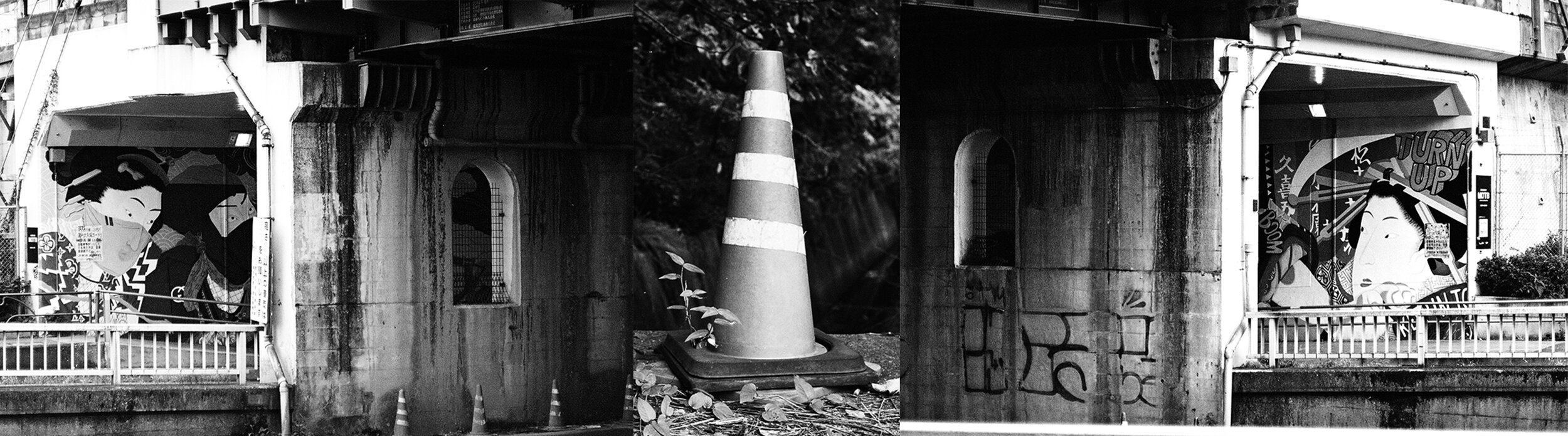
Passage | Díodos: Navigating Thresholds Through Art
Passage- díodos - is the space between. It is the corridor through which the self moves, the threshold that divides what was from what will be, the liminal terrain where transformation quietly unfolds. It is neither arrival nor departure, neither past nor future, but the pulse of becoming, the subtle tension of crossing. In life, díodos is everywhere: in grief that softens into acceptance, in trauma that slowly reshapes the sense of self, in identity that expands beyond familiar definitions. In art, it is the unseen architecture of creation: the moment before a brushstroke, the hesitation before a mark, the pause in shaping clay, the quiet between layered colors.
In the studio, passage is embodied. Materials are corridors, gestures are thresholds, and process is movement. Clay responds to gentle pressure, bending and folding in ways that echo the internal navigation of emotion. Watercolor drifts across paper, pooling in valleys, flowing over ridges, tracing paths that are at once intentional and accidental. Ink lines branch and intersect like veins or rivers, mapping passageways within the self. Every texture, every mark, every surface becomes a doorway - an entry into, through, and beyond the present state of being. To work with materials in this way is to inhabit díodos: to move with attention, to listen to resistance, to follow intuition.
In art therapy, passage is lived experience. It is a practice of witnessing the self in transition, of holding uncertainty without rushing to resolution, of honoring movement even when it is slow, fragmented, or hesitant. The client’s hand may linger over clay, molding shapes that embody fear, hope, or confusion; the brush may tremble in response to emotions that have no words. The therapist offers presence, creating a corridor of safety through which the client can traverse their internal landscapes. Here, thresholds are not barriers - they are invitations, spaces where vulnerability can be acknowledged and transformation can begin.
Díodos is inherently paradoxical. It is both fragile and resilient, quiet and intense, terrifying and exhilarating. The liminal space resists control, yet it is rich with possibility. In the studio, this paradox becomes tangible: a sculpture may wobble before standing firm, paint may blend in unexpected ways before revealing clarity, a collage may feel chaotic before coherence emerges. Each instance is a rehearsal of passage, a rehearsal of patience, attentiveness, and courage. The process mirrors life itself: layered, unpredictable, and alive.
There is a subtle poetry in the sensory experience of passage. Shadows fold over surfaces like the weight of unspoken thoughts; light refracts through watercolor, hinting at clarity beyond confusion; the pressure of fingers on clay registers tension and release, restraint and freedom. The materials echo the rhythm of díodos: sometimes yielding, sometimes resistant, always a companion to the internal journey. The artist or client learns to move with both care and curiosity, to inhabit each threshold fully, and to recognise that even hesitation is meaningful.
Díodos is also temporal. It unfolds slowly, imperceptibly, often without linearity. Movement through passage is rarely straightforward. Circles, loops, regressions, and repetitions are part of the journey. In art, these temporal qualities manifest in layering, overpainting, reworking, and revisiting. Each return to a material, mark, or composition is a step deeper into understanding - a negotiation with the unknown, a conversation with emerging insight. In therapy, this mirrors the human experience of transition: change is rarely sudden; growth is iterative, unfolding in waves and pulses.
The passage of díodos is intimate. It asks for vulnerability, attentiveness, and courage. To traverse thresholds in art and therapy is to acknowledge discomfort, uncertainty, and fear. Yet it is also to witness emergence, resilience, and insight. The liminal space becomes a mirror, reflecting fragments of identity, emotion, memory, and imagination. Through materials and process, these fragments can be held, examined, and integrated. Art offers a vocabulary for what is otherwise ineffable: the delicate navigation of transition, the architecture of transformation, the texture of becoming.
In its fullest expression, passage is transformative. It is the bridge between internal and external, abstract and tangible, chaos and form. The studio becomes a sanctuary, a corridor, a threshold in itself - a space where movement is honored, vulnerability is witnessed, and creativity becomes both path and destination. Each mark, each texture, each material choice carries the weight and grace of díodos, offering insight, reflection, and embodied understanding. Through art, passage is not only experienced but enacted; it is not only observed but lived.
Díodos reminds us that life is composed of thresholds, that the self is continually in motion, and that transformation is a process of engagement, courage, and care. The journey through passage is neither linear nor predictable, but it is meaningful. In art and therapy, it becomes visible, tangible, and shared. It teaches patience, curiosity, and presence. It shows that liminality is not empty, that transition is not absence, and that the spaces between - so easily overlooked - hold the richest potential for growth, expression, and connection.
Ultimately, passage - díodos - is a meditation on movement, a reflection on thresholds, and a practice of attentive presence. It is the art of crossing, the courage of emerging, and the quiet poetry of inhabiting in-between spaces. Through materials, gestures, and process, díodos transforms the invisible corridors of the mind into pathways of insight, resilience, and creation. It is the quiet, unfolding architecture of becoming, the tender and luminous practice of moving through and beyond, again and again.